This week we studied the Jehovah's Witnesses as a culture. Going into this, I didn't really have any expectations. I don't know much about Jehovah's Witnesses except that they consider themselves Christian, they believe in God and Jesus Christ, and that they believe that 144,000 people will live with God again. I didn't know exactly how that worked out. I also knew that from a healthcare perspective, they refuse any kind of blood product but didn't know why. I knew I would have a lot to learn about this religion's beliefs and culture.
I learned a lot about this culture through my research. I found that they believe that God is Jehovah instead of Jesus Christ like some other Christian religions believe. I learned that they don't believe in life after death. They believe that once we die, that is it until we are resurrected again. We don't go anywhere. We simply cease to exist for a time until resurrection or we are sent to Gehenna, or eternal destruction. I finally understand that they believe that the Earth will be raised to a paradisiacal state and after everyone is resurrected back from death, we will live there except the 144,000 special people who were the most faithful and chosen to be immediately changed into spiritual beings after death that return to live with God in Heaven. They are those who will rule under the newly crowned Jesus Christ as king to govern all the worlds in keeping God's kingdom in Heaven and on all the planets that God's children live on.
Some other things I learned were the reasons behind refusing blood products. They believe that all life is special and the life force of each person is their blood. They believe it is the soul. No person should take another person's blood including an animal's. They don't even believe in donating their own blood or storing it for themselves. The only person who gave His blood for another was Jesus Christ. They go to extremes to avoid the spilling of blood including limiting their activities to those that will help keep them safe from harm.
Now that I understand the reasons behind some of what Jehovah's Witnesses believe, I will be able to respect their choices in the way they want to be cared for and healed. It is hard to hear someone say they don't want life-giving substances like blood products when it's so easy to give them. But they truly believe that they would be taking something that is not theirs and they should never have. That is taking away someone else's life source. I will strive to be more respectful of the denial of something I believe would help when someone else believes it won't.
Although there are some things I personally don't agree with about what Jehovah's Witnesses believe, I respect them for sticking to their beliefs so thoroughly. There are not a lot of people who would stand with such conviction, especially in the face of possible death if severely injured or sick. I was also surprised by some of the things they do believe being in line with some of my personal beliefs. It is hard to listen to someone who thinks you are choosing something that isn't right and wants you to change, but I find it will be easier to have relationships with Jehovah's Witnesses now that I understand where they are coming from a little better.
Sunday, September 27, 2015

Saturday, September 19, 2015
This week's culture studied for my transcultural nursing class is the Latter Day Saint culture, otherwise known as Mormons. My expected learning outcomes for this culture was absolutely none. I am a member of the LDS church, I grew up as a Mormon from infancy, and I did not think anyone would be able to come up with an article that would have new information for me. I was, however, pleasantly surprised.
Some new things I learned about the LDS faith and culture were parts of the history of the church I did not previously know. I previously thought that as soon as God established His church again on this earth through His prophet Joseph Smith, all the keys of the priesthood were restored and the temple ordinances were received as soon as there was a temple presence on the earth again. That is apparently wrong. According to articles that were found, the process of restoring these ordinances and keys took twelve years to get right. It took a series of revelations and adjustments to be the way the Lord wanted it. It was not until the saints reached the Salt Lake Valley and the Salt Lake Temple was completed that the temple ordinances were solidified.
A lot of what was discussed in my group about the LDS culture was the revelation of the Word of Wisdom. It gives guidelines about what is good to consume such as grains, herbs, fruits and vegetables in their seasons, and meat sparingly as well as what is not good for the body such as strong drinks (alcohol), tobacco, and hot drinks like black and green tea and coffee. Knowing there are cultural limitations of the LDS faith, I will be more sensitive to other cultures and beliefs that have similar restrictions such as Jews, Muslims, and Jehovah's Witnesses. I want to be sensitive to restrictions that others believe in by not offering those things and making sure I understand why.
I obviously am partial the the LDS culture as I am a part of it. I personally believe in the teachings of this church, in Jesus Christ being our Lord and Savior, of the restoration of the gospel by Joseph Smith in these latter days, and in the Book of Mormon. I know that the people of the LDS church are not perfect, but the teachings are and I try to live by them every day.
Some new things I learned about the LDS faith and culture were parts of the history of the church I did not previously know. I previously thought that as soon as God established His church again on this earth through His prophet Joseph Smith, all the keys of the priesthood were restored and the temple ordinances were received as soon as there was a temple presence on the earth again. That is apparently wrong. According to articles that were found, the process of restoring these ordinances and keys took twelve years to get right. It took a series of revelations and adjustments to be the way the Lord wanted it. It was not until the saints reached the Salt Lake Valley and the Salt Lake Temple was completed that the temple ordinances were solidified.
A lot of what was discussed in my group about the LDS culture was the revelation of the Word of Wisdom. It gives guidelines about what is good to consume such as grains, herbs, fruits and vegetables in their seasons, and meat sparingly as well as what is not good for the body such as strong drinks (alcohol), tobacco, and hot drinks like black and green tea and coffee. Knowing there are cultural limitations of the LDS faith, I will be more sensitive to other cultures and beliefs that have similar restrictions such as Jews, Muslims, and Jehovah's Witnesses. I want to be sensitive to restrictions that others believe in by not offering those things and making sure I understand why.
I obviously am partial the the LDS culture as I am a part of it. I personally believe in the teachings of this church, in Jesus Christ being our Lord and Savior, of the restoration of the gospel by Joseph Smith in these latter days, and in the Book of Mormon. I know that the people of the LDS church are not perfect, but the teachings are and I try to live by them every day.
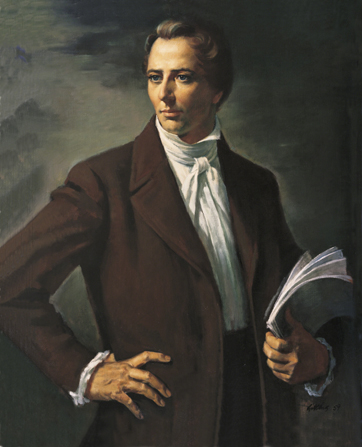 |
| Joseph Smith Jr. Image copyright https://www.lds.org/media-library/images/joseph-smith-82822?lang=eng |
Sunday, September 13, 2015
For our culture project, my group and I have selected the Shoshone Indians as the culture we want to gain more information on and write about. I am very excited about the prospect of it as I've always had a love for Native American culture and traditions. Many of the things we have learned so far have been familiar to me. I know a lot of history of the various tribes. I did not expect to be surprised by any of the information we were able to find without digging a little deeper.
Something I did learn, however, was that the Shoshone tribe was located a lot further north than I thought they were. I did not realize they lived a lot closer to where I am. It makes me excited to go to museums and see more of their history and artifacts than I have before. I also was not aware that Sacagawea, the Native American who led the famous explorers Lewis and Clark, was a part of the Shoshone tribe. I thought that was a really neat fact.
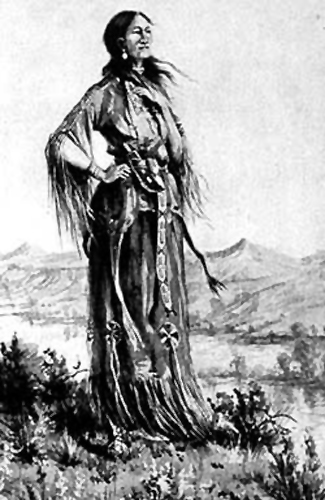 |
| Sacagawea. Image copyright of http://www.legendsofamerica.com/na-sacagawea.html |
I think that what I learned from the information that we have gathered so far is that you cannot assume you know everything about a particular person or culture. There will always be new things to learn and I have to be open to learning them. I cannot walk into a room and expect I have all the pertinent knowledge I need to care for a person. It is an ongoing relationship of trust and care and I need to let that relationship evolve rather than staying stagnant based off what I already know.
I really enjoy everything I have learned about the Shoshone tribe so far. I think they had a wonderful way of life and knew how to appreciate what they had. They worked hard and lived well. I will always have an appreciation for all Native American tribes and look forward to learning more about the Shoshone tribe.
Sunday, September 6, 2015
My name is Camille Hatch and I am a 3rd semester nursing student at Utah Valley University. I am attending nursing school to become a doctor of nurse practice nurse midwife. I have been a doula for seven years and now I want to do the catching!
I am making this blog as a reflective journal of my time spent in my transcultural nursing class, a class I am very excited about. It has always been my dream to travel the world and to learn about other cultures. I also want to help bring better and safer practices for pregnancy and birth to those who are not fortunate enough to have high quality care. I want to teach where I can and help empower people to search for better care.
I am making this blog as a reflective journal of my time spent in my transcultural nursing class, a class I am very excited about. It has always been my dream to travel the world and to learn about other cultures. I also want to help bring better and safer practices for pregnancy and birth to those who are not fortunate enough to have high quality care. I want to teach where I can and help empower people to search for better care.
Subscribe to:
Posts (Atom)