Honestly, I had a hard time doing research for this week's "culture" because there are way too many countries that make up the Asian continent. There is no way that one article or one study is able to understand all the different Asian cultures and summarize it into cultural traits of all those people. I did not appreciate the inference that there is only one Asian culture, but I did research some of the issues that Asian Americans face while trying to find access healthcare here in the United States.
Some of the problems that Asian Americans face when trying to access healthcare in the United States are language barriers, conceptualizing illness, interpersonal relationships and the influence they have over sick individuals. First, the language barrier exists on many levels. It is not simply the inability to understand English and needing an interpreter. Many times Asian people, especially the elderly, are not literate to a standard that US medical pamphlets are printed in. Also, many times, older Asians are illiterate in their own native languages, as well. Even if an interpreter can be found, they cannot simply give a pamphlet to the patient and tell them it explains it all. Also, it is very hard to translate medical information into Asian languages and often the interpreter will translate literally. This goes hand in hand with conceptualizing illness. Many Asian countries do not have the words to conceptualize different illnesses or problems within the body. There is no medical terminology to explain or translate to. Without a basic medical language, it is impossible to explain illness and procedures from one language to another. Interpersonal relationships come into play because the family needs and wants outweigh what the individual needs and wants. Accommodating the family and individual at the same time is very difficult and sometimes clashes against each other.
I know I will have the opportunity to care for an Asian patient in my career, but it honestly seems a little overwhelming trying to communicate what I want to convey even with the use of a translator. I will have to find a way to make myself understood to both my patient and the patient's family to have good communication and compliancy of care. I will need to find my boundaries of where I am willing to let the family override the patient and where I am not. This is difficult and I will need to search how I feel before I can enter a situation like this.
I honestly do not know enough about the many different Asian cultures to be able to form personal feelings about it. I will say that I love all kinds of Asian food and the Asians I have been able to meet were all very nice and polite. It has always been my dream to travel to some of these countries, and I hope I will have the opportunity to form some good and happy feelings toward their cultures.
Sunday, November 22, 2015

Sunday, November 15, 2015
I have to admit I do not know much about this week's culture for our transcultural nursing class. The only things I know about the Jewish culture are their food restrictions, a few of their observances, and the history of the Holocaust, which I feel would have a big impact on Jews today. The gate is wide open for the knowledge I expected to gain during my research.
I chose to research the Jewish culture's view on charity. Little did I know I was opening a can of worms. I typed a few simple words and up pulled a long list of articles about the Jewish custom of Tzedakah. Tzedakah roughly translated means charity. Traditionally, this was a very important practice and part of the Torah way of life. Everyone was expected to give in any way they could. It was not only for the rich to bestow help to the poor. It was for everyone to help who they could. Even those who were in need should help how they could. Through these acts as well as repentance and prayer, a Jewish person is able to receive forgiveness or a favor from God. In addition to providing assistance, it was not looked at as shameful to accept assistance. One should not act foolishly and cause themselves to be a burden, but they should be willing to ask for help. These practices are still very much alive today among the Orthodox Jews.
I think that the way a lot of Jewish people perceive the act of charity is very inspiring. Knowing this information, I can strive to give my patients the same courtesy and charity that they would show me. I also would make sure to thank those who have donated to healthcare facilities as that is one of the ways they are able to fulfill their obligation of Tzedakah.
Based off the information I have learned, I have a new found respect for Jewish people and their desire to give and be charitable. I think it is something we should all be striving for whether we are Jewish or not. I have always respected devout Jewish people and their strict observances of their religion. The more I learn, the more I understand why they do what they do and I can only gain more respect for their customs and culture.
I chose to research the Jewish culture's view on charity. Little did I know I was opening a can of worms. I typed a few simple words and up pulled a long list of articles about the Jewish custom of Tzedakah. Tzedakah roughly translated means charity. Traditionally, this was a very important practice and part of the Torah way of life. Everyone was expected to give in any way they could. It was not only for the rich to bestow help to the poor. It was for everyone to help who they could. Even those who were in need should help how they could. Through these acts as well as repentance and prayer, a Jewish person is able to receive forgiveness or a favor from God. In addition to providing assistance, it was not looked at as shameful to accept assistance. One should not act foolishly and cause themselves to be a burden, but they should be willing to ask for help. These practices are still very much alive today among the Orthodox Jews.
I think that the way a lot of Jewish people perceive the act of charity is very inspiring. Knowing this information, I can strive to give my patients the same courtesy and charity that they would show me. I also would make sure to thank those who have donated to healthcare facilities as that is one of the ways they are able to fulfill their obligation of Tzedakah.
Based off the information I have learned, I have a new found respect for Jewish people and their desire to give and be charitable. I think it is something we should all be striving for whether we are Jewish or not. I have always respected devout Jewish people and their strict observances of their religion. The more I learn, the more I understand why they do what they do and I can only gain more respect for their customs and culture.
Sunday, November 8, 2015
I was not quite sure what I expected to learn about this week's culture. We researched Native Americans, but since there are many tribes with differing cultures and regions, it is hard to pinpoint a whole collective culture. I have learned a lot about the Shoshone this semester as it is my semester project, but I wanted to learn more about other tribes than just this one group, which in itself is made up of three different regional tribes.
My research did find one article that was pretty all-encompasing as far as I can gather about the traditions surrounding pregnancy and childbirth for Native Americans. The article talks about how Native Americans traditionally believed in taking great care of themselves during their pregnancy to ensure a swift and uncomplicated birth. They ate healthy and took care of themselves physically as well as maintained a happy and peaceful spiritual setting during their pregnancies. They often used herbal remedies to prepare for birth and utilized physiological birth practices such as upright positioning and intuitive birthing movements to speed the birthing process. Traditionally, First Nation women were served by only other women during their birthing time and many rites and rituals were performed to ensure good fortune and a swift birth. Some of these traditions are still practiced today.
Since I am going to school to be a midwife, I found this information particularly important. It is good to know where particular beliefs and practices that our clients have come from to understand why they do what they do. There seem to be more regarding pregnancy and childbirth specifically. I want to provide for those beliefs and practices among my varied clients as long as they are safe. This research helps me know what I can do to enable these practices for this culture.
I find this culture to be the most interesting out of any I have researched. I have always had some intrigue about Native American culture and history. I love to read their stories and learn about their mythology and beliefs. I have had a few Native American friends and they are wonderful people with wonderful backgrounds. I hope I get the opportunity to serve Native American women in my practice and learn more about their traditions and culture.
My research did find one article that was pretty all-encompasing as far as I can gather about the traditions surrounding pregnancy and childbirth for Native Americans. The article talks about how Native Americans traditionally believed in taking great care of themselves during their pregnancy to ensure a swift and uncomplicated birth. They ate healthy and took care of themselves physically as well as maintained a happy and peaceful spiritual setting during their pregnancies. They often used herbal remedies to prepare for birth and utilized physiological birth practices such as upright positioning and intuitive birthing movements to speed the birthing process. Traditionally, First Nation women were served by only other women during their birthing time and many rites and rituals were performed to ensure good fortune and a swift birth. Some of these traditions are still practiced today.
Since I am going to school to be a midwife, I found this information particularly important. It is good to know where particular beliefs and practices that our clients have come from to understand why they do what they do. There seem to be more regarding pregnancy and childbirth specifically. I want to provide for those beliefs and practices among my varied clients as long as they are safe. This research helps me know what I can do to enable these practices for this culture.
I find this culture to be the most interesting out of any I have researched. I have always had some intrigue about Native American culture and history. I love to read their stories and learn about their mythology and beliefs. I have had a few Native American friends and they are wonderful people with wonderful backgrounds. I hope I get the opportunity to serve Native American women in my practice and learn more about their traditions and culture.
Sunday, November 1, 2015
The Deaf culture is a very interesting one and one that I fully enjoyed immersing myself in. I have a lot of Deaf friends and have taken American Sign Language classes in the past. I was hoping to learn something that I did not already have previous knowledge of because of my previous experience with Deaf people. I know I do not know everything about their culture even though I have many Deaf friends and I was excited to find something new.
Most of research results were things I had experienced with my friends and classes. I read about how open most Deaf people are. They are very straight forward and prefer you speak directly to them instead of trying to avoid them. They are accommodating and will try to help you understand them if you can't. Many do not perceive themselves as having a handicap and will not worry about or seek ways to correct their hearing deficit. They have a rich culture and language and are wonderful people to learn about.
One new thing I did learn was that there is a difference in the way they describe themselves. There is deaf and there is Deaf. People who associate with the culture, do not see themselves as handicapped, have mainly Deaf friends, and do not try to live within the hearing community are considered Deaf. Those who do not learn sign language, try to be as close to hearing culture as they can, and try to fix their hearing loss are termed deaf. Another thing I learned is that Deaf people tend not to seek healthcare because they feel like caregivers see them as having a disability and often leave feeling traumatized or worse than when they arrived.
I am very saddened by that last bit of information about the barrier between caregivers and Deaf people. I would never want to create those feelings in another person whether it is because they are Deaf or not. I know that there are translators available, but even with translators, I will still try my best to treat Deaf people as normal and listen intently to what they communicate and make them feel welcome. There is no reason for them to unwelcome when they are seeking healthcare and there are always ways to communicate without words.
I love and appreciate the Deaf culture and everything they offer. All the Deaf people I have met and had the privilege of associating with have been very courteous, kind, patient, and willing to talk. They are honest and blunt but so good about it. I like being able to communicate more with my hands and body movements and be able to read people honestly instead of hoping to catch the tone of their voice correctly. It is so wonderful to spend time with Deaf people and I love all those that I have the privilege of having in my life.
Most of research results were things I had experienced with my friends and classes. I read about how open most Deaf people are. They are very straight forward and prefer you speak directly to them instead of trying to avoid them. They are accommodating and will try to help you understand them if you can't. Many do not perceive themselves as having a handicap and will not worry about or seek ways to correct their hearing deficit. They have a rich culture and language and are wonderful people to learn about.
One new thing I did learn was that there is a difference in the way they describe themselves. There is deaf and there is Deaf. People who associate with the culture, do not see themselves as handicapped, have mainly Deaf friends, and do not try to live within the hearing community are considered Deaf. Those who do not learn sign language, try to be as close to hearing culture as they can, and try to fix their hearing loss are termed deaf. Another thing I learned is that Deaf people tend not to seek healthcare because they feel like caregivers see them as having a disability and often leave feeling traumatized or worse than when they arrived.
I am very saddened by that last bit of information about the barrier between caregivers and Deaf people. I would never want to create those feelings in another person whether it is because they are Deaf or not. I know that there are translators available, but even with translators, I will still try my best to treat Deaf people as normal and listen intently to what they communicate and make them feel welcome. There is no reason for them to unwelcome when they are seeking healthcare and there are always ways to communicate without words.
I love and appreciate the Deaf culture and everything they offer. All the Deaf people I have met and had the privilege of associating with have been very courteous, kind, patient, and willing to talk. They are honest and blunt but so good about it. I like being able to communicate more with my hands and body movements and be able to read people honestly instead of hoping to catch the tone of their voice correctly. It is so wonderful to spend time with Deaf people and I love all those that I have the privilege of having in my life.
Sunday, October 25, 2015
Some things I expected to learn about the Hispanic/Latin culture going into this week's research was that the people of this culture are very hard working, family centered, and giving. I grew up with a lot of Latin friends and this is exactly how they were. I am sure there are some who deviate as with any culture, but it has always been my experience that Latin people are kind, caring, and willing to help in whatever way they can. I expected that in my research I would find the same trends.
My research revealed all the things I had expected and more. I learned the traditions of the quinceanera and the significance of them. I learned about the Day of the Dead and how Hispanic/Latin cultures take two days to remember their dead and celebrate their lives. I learned how they approach death and grief for those who have passed on, about how it is seen as respect for their loved one to grieve. I also learned that family is such a big presence in their lives that when it comes to choices about medical care, it is the family's decision and not the individuals that will be followed.
Knowing that the family members of a Hispanic/Latin person are the ones to make decisions on his or her behalf whether it is what the person wants or not makes me realize I need to consider my own beliefs and if I am okay with that. In a hospital setting, we advocate for the patient and their desires. I believe in full autonomy. Knowing this cultural difference is difficult for me. I will have to be prepared for this situation if it ever arises, which I am sure it will. I will have to understand this is important for their culture and respect their wishes while still insuring my patient is understood and receiving the best care I can give.
I love Hispanic/Latin people and their culture and traditions so much. I grew up with many friends from all over Latin America. They embraced me so fully just like I learned they always would. I am a dancer and it was my pleasure to be taught by them about their music and dances. It was a privilege to eat their meals with them and attend their parties and religious services. This is by far one of my favorite cultures and people. I will always carry a great love and deep respect for Hispanic/Latin people, their traditions and beliefs, and their obstinate ability to be kind and hardworking.
My research revealed all the things I had expected and more. I learned the traditions of the quinceanera and the significance of them. I learned about the Day of the Dead and how Hispanic/Latin cultures take two days to remember their dead and celebrate their lives. I learned how they approach death and grief for those who have passed on, about how it is seen as respect for their loved one to grieve. I also learned that family is such a big presence in their lives that when it comes to choices about medical care, it is the family's decision and not the individuals that will be followed.
Knowing that the family members of a Hispanic/Latin person are the ones to make decisions on his or her behalf whether it is what the person wants or not makes me realize I need to consider my own beliefs and if I am okay with that. In a hospital setting, we advocate for the patient and their desires. I believe in full autonomy. Knowing this cultural difference is difficult for me. I will have to be prepared for this situation if it ever arises, which I am sure it will. I will have to understand this is important for their culture and respect their wishes while still insuring my patient is understood and receiving the best care I can give.
I love Hispanic/Latin people and their culture and traditions so much. I grew up with many friends from all over Latin America. They embraced me so fully just like I learned they always would. I am a dancer and it was my pleasure to be taught by them about their music and dances. It was a privilege to eat their meals with them and attend their parties and religious services. This is by far one of my favorite cultures and people. I will always carry a great love and deep respect for Hispanic/Latin people, their traditions and beliefs, and their obstinate ability to be kind and hardworking.
Sunday, October 18, 2015
The Muslim culture is what we researched this week for our transcultural nursing class. I have to admit I had some premature misconceptions of the Muslim culture and faith based off of extremist actions in the news and in popular conversation. It is easy to form assumptions and beliefs about another culture or faith because you do not understand it. That was the case for me before I actually looked into what Muslims believe. I had expected to learn more of what I had heard in the news and heard in conversing with others. I didn't.
What I actually learned was that, while there are radicals that end up in the news for doing horrible things, most Muslims live in peace and try to follow their faith and teachings from God just like most of us do. There are radicals in every culture and faith. I learned that Muslims actually do believe in God (I had not realized this before) and hold many beliefs I do as a Christian. They have many of the same scriptures and commandments. While they do have different gender roles and customs according to dress than I do, I learned that it is not to shame women or degrade them. They hold their guidelines out of respect and a desire to protect women.
Another thing I learned about was how Muslims feel about death. It is a natural part of life for them and is not taboo or feared. They respect their dead just as their living and want them to have a proper burial soon after death. They believe that the dead can perceive pain. They do not want their dead to feel pain, and, because of this and the delay it can cause in burial, they usually forgo an autopsy. I learned the guidelines for placement of a deceased Muslim and the care that is given to each person who has passed on.
I am glad that I was able to learn about the muslim belief in the sanctity of life and their concept of death. I will make sure that if I am ever in the position to provide care for a Muslim, I will ensure they know how much I want to protect that life and keep them well. I will also follow the instructions given to Muslims about preparing their dead for burial if I am ever in that situation. I believe that is how every person who has died should be treated.
I still have some misgivings about the inequality for Muslim girls in education and other areas in some Islamic countries, but many of the assumptions I held I know are wrong. I cannot base my attitude toward someone based off secondhand reports from another country or by the behavior of a small group of extremists. It would be easy to be lazy and hate someone who does something wrong in the name of a much larger group, but I do not want to do that. I will take the opportunity to get to know each individual Muslim who I cross paths with or have the possibility to care for for who they are and not by the actions of someone else who did something out of hate. I am excited for the occasion!
Sunday, October 11, 2015
This week in Transcultural Nursing we researched the Catholic culture. I expected to learn about the traditional religious ceremonies and beliefs they have. I did learn a little more about these things, but I did not seek that out specifically. I tried to focus my efforts for research in a different area. I wanted to learn more about the history of the Catholic church since it is one of the oldest Christian churches in existence.
From this research I learned that the Catholic church is the church that emerged after the death of Jesus Christ. They believe that the mantle of the church passed from Christ to Peter, who is considered the first pope. From Peter, the line of popes has been an uninterrupted chain all the way till present day. People from the Roman Catholic Church believe that the current pope possesses all the same authority and power that Christ gave to Peter.
I think the best way to utilize what I have learned this week is to simply recognize another's beliefs and respect them for it. They are not my beliefs, but someone else does believe in this and I need to be considerate of that. We need to establish relationships of trust with our patients, and that cannot be achieved if they feel we have contempt for them or disregard their beliefs and feelings in anyway.
I find the Catholic culture very fascinating. They have such a rich history and every simple thing they do has meaning and significance. I appreciate the value they place in performing things perfectly. I would love to learn more about how their current religious traditions came to be and possibly go and view them myself.
From this research I learned that the Catholic church is the church that emerged after the death of Jesus Christ. They believe that the mantle of the church passed from Christ to Peter, who is considered the first pope. From Peter, the line of popes has been an uninterrupted chain all the way till present day. People from the Roman Catholic Church believe that the current pope possesses all the same authority and power that Christ gave to Peter.
I think the best way to utilize what I have learned this week is to simply recognize another's beliefs and respect them for it. They are not my beliefs, but someone else does believe in this and I need to be considerate of that. We need to establish relationships of trust with our patients, and that cannot be achieved if they feel we have contempt for them or disregard their beliefs and feelings in anyway.
I find the Catholic culture very fascinating. They have such a rich history and every simple thing they do has meaning and significance. I appreciate the value they place in performing things perfectly. I would love to learn more about how their current religious traditions came to be and possibly go and view them myself.
Sunday, October 4, 2015
This week we researched the homeless population and the associated culture. I was hoping to learn a little more about their social construct and if there is some kind of hierarchy among them. I expected to learn about their healthcare needs as there are many of them and a lot of research goes into this specific area. I wanted to delve a little deeper and find other research besides just the homeless population's need for healthcare and the risks they have.
I ended up learning that men are at greater risk for homelessness because they are less likely to ask for help if they are in financial trouble. It is also harder for them to ask for help to get out of their situation when they become homeless. Men are taught to be masculine, strong, and self-sufficient. Homeless men are no different. I also learned that men who restrict themselves to these gender roles are more prone to maladaptive behaviors such as addiction and violence against women.
I think it is important to ask what help a homeless person needs. We know they need help, but we need to ask specifically instead of with yes or no questions. I think it is also important to establish a relationship of trust so the homeless person feels comfortable addressing their issues and asking for help. I am sure it is difficult to talk about for some people in these circumstances, but letting them know you are not their to judge them and only want to help them the best you can will allow them to open up and promote better care.
I think the homeless culture is a tough one to deal with, but it is worth it if we give the time. It is a problem that is not going away. Many people are unwilling to help and are more often annoyed by homeless people. But if we take a moment and really look at them as people who fell on hard times and just need a little help, we can make a big difference in at least one person's life.
I ended up learning that men are at greater risk for homelessness because they are less likely to ask for help if they are in financial trouble. It is also harder for them to ask for help to get out of their situation when they become homeless. Men are taught to be masculine, strong, and self-sufficient. Homeless men are no different. I also learned that men who restrict themselves to these gender roles are more prone to maladaptive behaviors such as addiction and violence against women.
I think it is important to ask what help a homeless person needs. We know they need help, but we need to ask specifically instead of with yes or no questions. I think it is also important to establish a relationship of trust so the homeless person feels comfortable addressing their issues and asking for help. I am sure it is difficult to talk about for some people in these circumstances, but letting them know you are not their to judge them and only want to help them the best you can will allow them to open up and promote better care.
I think the homeless culture is a tough one to deal with, but it is worth it if we give the time. It is a problem that is not going away. Many people are unwilling to help and are more often annoyed by homeless people. But if we take a moment and really look at them as people who fell on hard times and just need a little help, we can make a big difference in at least one person's life.
Sunday, September 27, 2015
This week we studied the Jehovah's Witnesses as a culture. Going into this, I didn't really have any expectations. I don't know much about Jehovah's Witnesses except that they consider themselves Christian, they believe in God and Jesus Christ, and that they believe that 144,000 people will live with God again. I didn't know exactly how that worked out. I also knew that from a healthcare perspective, they refuse any kind of blood product but didn't know why. I knew I would have a lot to learn about this religion's beliefs and culture.
I learned a lot about this culture through my research. I found that they believe that God is Jehovah instead of Jesus Christ like some other Christian religions believe. I learned that they don't believe in life after death. They believe that once we die, that is it until we are resurrected again. We don't go anywhere. We simply cease to exist for a time until resurrection or we are sent to Gehenna, or eternal destruction. I finally understand that they believe that the Earth will be raised to a paradisiacal state and after everyone is resurrected back from death, we will live there except the 144,000 special people who were the most faithful and chosen to be immediately changed into spiritual beings after death that return to live with God in Heaven. They are those who will rule under the newly crowned Jesus Christ as king to govern all the worlds in keeping God's kingdom in Heaven and on all the planets that God's children live on.
Some other things I learned were the reasons behind refusing blood products. They believe that all life is special and the life force of each person is their blood. They believe it is the soul. No person should take another person's blood including an animal's. They don't even believe in donating their own blood or storing it for themselves. The only person who gave His blood for another was Jesus Christ. They go to extremes to avoid the spilling of blood including limiting their activities to those that will help keep them safe from harm.
Now that I understand the reasons behind some of what Jehovah's Witnesses believe, I will be able to respect their choices in the way they want to be cared for and healed. It is hard to hear someone say they don't want life-giving substances like blood products when it's so easy to give them. But they truly believe that they would be taking something that is not theirs and they should never have. That is taking away someone else's life source. I will strive to be more respectful of the denial of something I believe would help when someone else believes it won't.
Although there are some things I personally don't agree with about what Jehovah's Witnesses believe, I respect them for sticking to their beliefs so thoroughly. There are not a lot of people who would stand with such conviction, especially in the face of possible death if severely injured or sick. I was also surprised by some of the things they do believe being in line with some of my personal beliefs. It is hard to listen to someone who thinks you are choosing something that isn't right and wants you to change, but I find it will be easier to have relationships with Jehovah's Witnesses now that I understand where they are coming from a little better.
I learned a lot about this culture through my research. I found that they believe that God is Jehovah instead of Jesus Christ like some other Christian religions believe. I learned that they don't believe in life after death. They believe that once we die, that is it until we are resurrected again. We don't go anywhere. We simply cease to exist for a time until resurrection or we are sent to Gehenna, or eternal destruction. I finally understand that they believe that the Earth will be raised to a paradisiacal state and after everyone is resurrected back from death, we will live there except the 144,000 special people who were the most faithful and chosen to be immediately changed into spiritual beings after death that return to live with God in Heaven. They are those who will rule under the newly crowned Jesus Christ as king to govern all the worlds in keeping God's kingdom in Heaven and on all the planets that God's children live on.
Some other things I learned were the reasons behind refusing blood products. They believe that all life is special and the life force of each person is their blood. They believe it is the soul. No person should take another person's blood including an animal's. They don't even believe in donating their own blood or storing it for themselves. The only person who gave His blood for another was Jesus Christ. They go to extremes to avoid the spilling of blood including limiting their activities to those that will help keep them safe from harm.
Now that I understand the reasons behind some of what Jehovah's Witnesses believe, I will be able to respect their choices in the way they want to be cared for and healed. It is hard to hear someone say they don't want life-giving substances like blood products when it's so easy to give them. But they truly believe that they would be taking something that is not theirs and they should never have. That is taking away someone else's life source. I will strive to be more respectful of the denial of something I believe would help when someone else believes it won't.
Although there are some things I personally don't agree with about what Jehovah's Witnesses believe, I respect them for sticking to their beliefs so thoroughly. There are not a lot of people who would stand with such conviction, especially in the face of possible death if severely injured or sick. I was also surprised by some of the things they do believe being in line with some of my personal beliefs. It is hard to listen to someone who thinks you are choosing something that isn't right and wants you to change, but I find it will be easier to have relationships with Jehovah's Witnesses now that I understand where they are coming from a little better.
Saturday, September 19, 2015
This week's culture studied for my transcultural nursing class is the Latter Day Saint culture, otherwise known as Mormons. My expected learning outcomes for this culture was absolutely none. I am a member of the LDS church, I grew up as a Mormon from infancy, and I did not think anyone would be able to come up with an article that would have new information for me. I was, however, pleasantly surprised.
Some new things I learned about the LDS faith and culture were parts of the history of the church I did not previously know. I previously thought that as soon as God established His church again on this earth through His prophet Joseph Smith, all the keys of the priesthood were restored and the temple ordinances were received as soon as there was a temple presence on the earth again. That is apparently wrong. According to articles that were found, the process of restoring these ordinances and keys took twelve years to get right. It took a series of revelations and adjustments to be the way the Lord wanted it. It was not until the saints reached the Salt Lake Valley and the Salt Lake Temple was completed that the temple ordinances were solidified.
A lot of what was discussed in my group about the LDS culture was the revelation of the Word of Wisdom. It gives guidelines about what is good to consume such as grains, herbs, fruits and vegetables in their seasons, and meat sparingly as well as what is not good for the body such as strong drinks (alcohol), tobacco, and hot drinks like black and green tea and coffee. Knowing there are cultural limitations of the LDS faith, I will be more sensitive to other cultures and beliefs that have similar restrictions such as Jews, Muslims, and Jehovah's Witnesses. I want to be sensitive to restrictions that others believe in by not offering those things and making sure I understand why.
I obviously am partial the the LDS culture as I am a part of it. I personally believe in the teachings of this church, in Jesus Christ being our Lord and Savior, of the restoration of the gospel by Joseph Smith in these latter days, and in the Book of Mormon. I know that the people of the LDS church are not perfect, but the teachings are and I try to live by them every day.
Some new things I learned about the LDS faith and culture were parts of the history of the church I did not previously know. I previously thought that as soon as God established His church again on this earth through His prophet Joseph Smith, all the keys of the priesthood were restored and the temple ordinances were received as soon as there was a temple presence on the earth again. That is apparently wrong. According to articles that were found, the process of restoring these ordinances and keys took twelve years to get right. It took a series of revelations and adjustments to be the way the Lord wanted it. It was not until the saints reached the Salt Lake Valley and the Salt Lake Temple was completed that the temple ordinances were solidified.
A lot of what was discussed in my group about the LDS culture was the revelation of the Word of Wisdom. It gives guidelines about what is good to consume such as grains, herbs, fruits and vegetables in their seasons, and meat sparingly as well as what is not good for the body such as strong drinks (alcohol), tobacco, and hot drinks like black and green tea and coffee. Knowing there are cultural limitations of the LDS faith, I will be more sensitive to other cultures and beliefs that have similar restrictions such as Jews, Muslims, and Jehovah's Witnesses. I want to be sensitive to restrictions that others believe in by not offering those things and making sure I understand why.
I obviously am partial the the LDS culture as I am a part of it. I personally believe in the teachings of this church, in Jesus Christ being our Lord and Savior, of the restoration of the gospel by Joseph Smith in these latter days, and in the Book of Mormon. I know that the people of the LDS church are not perfect, but the teachings are and I try to live by them every day.
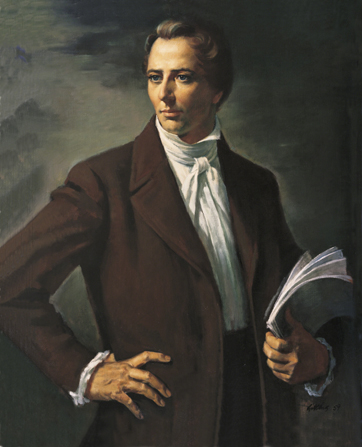 |
| Joseph Smith Jr. Image copyright https://www.lds.org/media-library/images/joseph-smith-82822?lang=eng |
Sunday, September 13, 2015
For our culture project, my group and I have selected the Shoshone Indians as the culture we want to gain more information on and write about. I am very excited about the prospect of it as I've always had a love for Native American culture and traditions. Many of the things we have learned so far have been familiar to me. I know a lot of history of the various tribes. I did not expect to be surprised by any of the information we were able to find without digging a little deeper.
Something I did learn, however, was that the Shoshone tribe was located a lot further north than I thought they were. I did not realize they lived a lot closer to where I am. It makes me excited to go to museums and see more of their history and artifacts than I have before. I also was not aware that Sacagawea, the Native American who led the famous explorers Lewis and Clark, was a part of the Shoshone tribe. I thought that was a really neat fact.
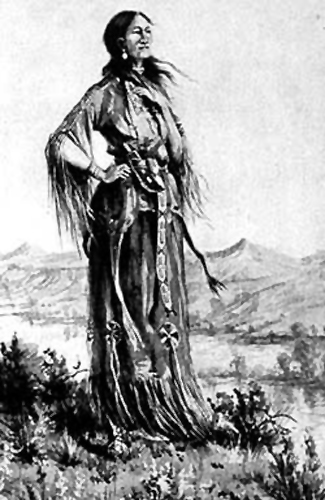 |
| Sacagawea. Image copyright of http://www.legendsofamerica.com/na-sacagawea.html |
I think that what I learned from the information that we have gathered so far is that you cannot assume you know everything about a particular person or culture. There will always be new things to learn and I have to be open to learning them. I cannot walk into a room and expect I have all the pertinent knowledge I need to care for a person. It is an ongoing relationship of trust and care and I need to let that relationship evolve rather than staying stagnant based off what I already know.
I really enjoy everything I have learned about the Shoshone tribe so far. I think they had a wonderful way of life and knew how to appreciate what they had. They worked hard and lived well. I will always have an appreciation for all Native American tribes and look forward to learning more about the Shoshone tribe.
Sunday, September 6, 2015
My name is Camille Hatch and I am a 3rd semester nursing student at Utah Valley University. I am attending nursing school to become a doctor of nurse practice nurse midwife. I have been a doula for seven years and now I want to do the catching!
I am making this blog as a reflective journal of my time spent in my transcultural nursing class, a class I am very excited about. It has always been my dream to travel the world and to learn about other cultures. I also want to help bring better and safer practices for pregnancy and birth to those who are not fortunate enough to have high quality care. I want to teach where I can and help empower people to search for better care.
I am making this blog as a reflective journal of my time spent in my transcultural nursing class, a class I am very excited about. It has always been my dream to travel the world and to learn about other cultures. I also want to help bring better and safer practices for pregnancy and birth to those who are not fortunate enough to have high quality care. I want to teach where I can and help empower people to search for better care.
Subscribe to:
Posts (Atom)